
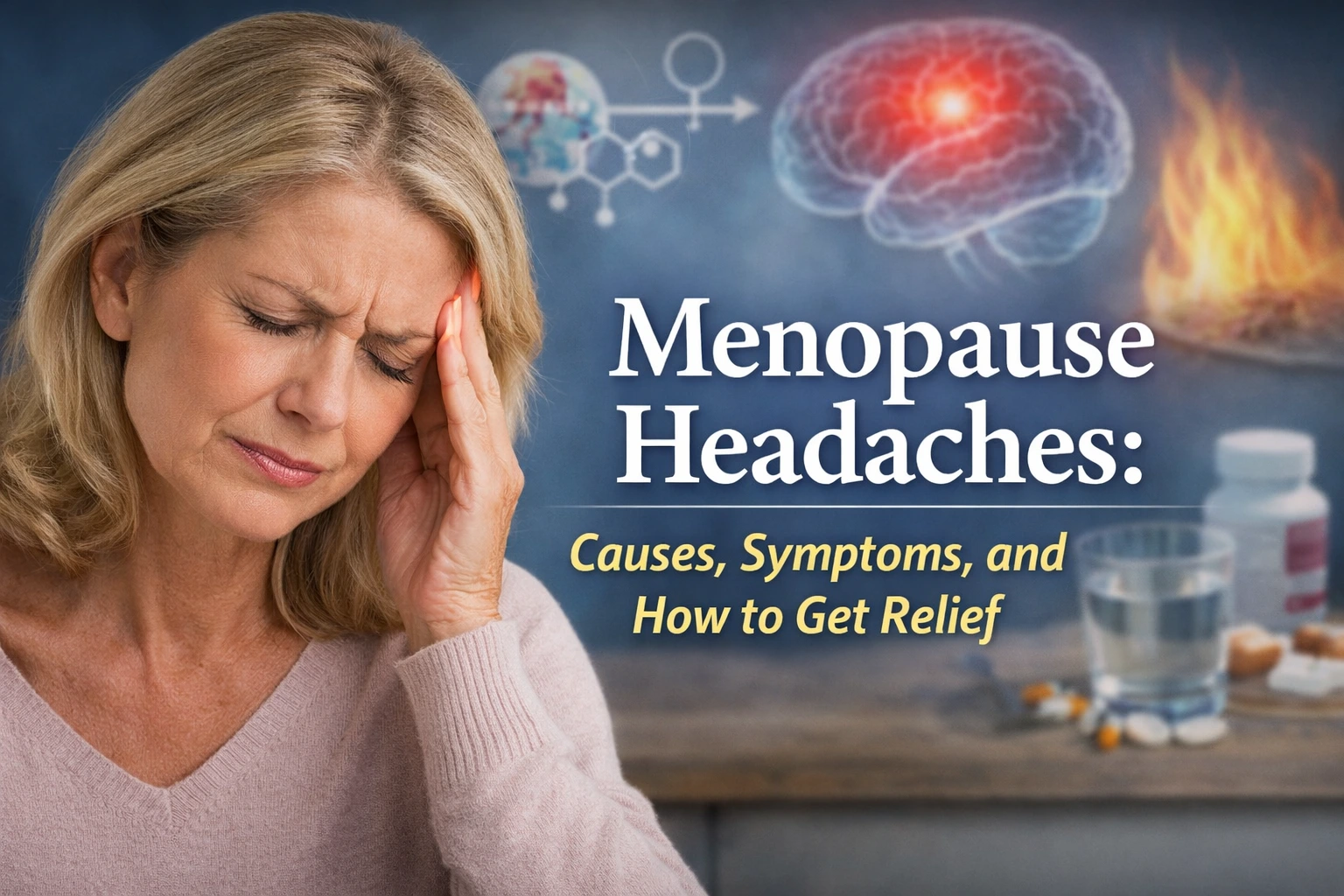
Menopause headaches are a common but often overlooked symptom that many women experience during perimenopause and menopause.
If you’ve started having headaches more frequently in your 40s or 50s, or your migraines have become worse, hormonal changes are often the underlying cause.
Fluctuations in estrogen can affect how your brain regulates pain, blood vessels, and neurotransmitters.
These changes can trigger headaches ranging from mild tension headaches to severe migraines.
While menopause headaches can be disruptive, understanding why they happen and how to treat them can help you find lasting relief.
GET HELP WITH YOUR MENOPAUSE SYMPTOMS
What Are Menopause Headaches?
Menopause headaches are headaches caused by hormonal changes, particularly fluctuations and declines in estrogen levels.
They most commonly occur during perimenopause, the transitional stage leading up to menopause, but may continue during menopause itself.
These headaches may feel like tension headaches or migraines and can vary in intensity, duration, and frequency.
Some women experience headaches for the first time during menopause, while others notice existing headaches becoming more frequent or severe.
Hormonal instability is the primary driver behind these headaches, making proper hormone evaluation and treatment an important part of managing symptoms.
Are Headaches a Symptom of Menopause?
Yes, headaches are a recognized symptom of menopause.
Hormonal fluctuations, especially declining estrogen levels, can directly affect the nervous system and increase sensitivity to pain.
Estrogen plays an important role in regulating brain chemicals such as serotonin, which influences pain perception.
When estrogen levels drop or fluctuate unpredictably, it can trigger headaches or migraines.
Many women notice headaches alongside other menopause symptoms, including:
- Hot flashes
- Sleep disturbances
- Mood changes
- Brain fog
- Fatigue
Headaches are especially common during perimenopause, when hormone levels fluctuate the most.
What Do Menopause Headaches Feel Like?
Menopause headaches can feel different depending on the type and severity, but common symptoms include:
- Pressure or tightness around the head
- Throbbing or pulsing pain
- Pain on one or both sides of the head
- Neck and shoulder tension
- Sensitivity to light or sound
- Fatigue or difficulty concentrating
Some headaches feel like tension headaches, while others resemble migraines, which can include nausea, visual disturbances, and severe throbbing pain.
These headaches may occur occasionally or become more frequent during periods of hormonal instability.
Menopause Headache Symptoms Checklist
Menopause headaches often occur alongside other hormonal symptoms.
Common signs include:
- Headaches that begin during perimenopause
- Headaches that worsen as periods become irregular
- Increased migraine frequency
- Headaches accompanied by hot flashes
- Morning headaches or headaches after poor sleep
- Headaches linked to stress or fatigue
Tracking your symptoms can help identify patterns and guide appropriate treatment.
When Do Perimenopause and Menopause Headaches Start?
Menopause headaches most often begin during perimenopause, which can start several years before menopause.
Hormone levels during perimenopause fluctuate unpredictably, which increases the likelihood of headaches.
There are three main stages when headaches may occur:
Perimenopause
This is when headaches are most common.
Estrogen levels rise and fall unpredictably, triggering headaches or worsening migraines.
Women may notice:
- More frequent headaches
- New migraine symptoms
- Headaches tied to hormonal fluctuations
Menopause
Menopause is officially diagnosed after 12 months without a menstrual period.
Studies show during this stage, estrogen levels decline significantly.
Some women continue to experience headaches while the body adjusts to lower hormone levels.
Postmenopause
After menopause, estrogen levels stabilize at consistently lower levels.
For many women, headaches improve or occur less frequently once hormone fluctuations stop.
Why Menopause Causes Headaches
Hormonal changes, especially estrogen fluctuations, are the primary cause of menopause headaches.
Estrogen affects multiple systems involved in headache development.
Nervous System Sensitivity
Estrogen helps regulate how the brain processes pain.
When estrogen levels drop, the nervous system becomes more sensitive to pain signals.
This increased sensitivity makes headaches more likely.
Blood Vessel Changes
Estrogen helps regulate blood vessel function.
Hormonal fluctuations can cause blood vessels to constrict or dilate, which is a known trigger for headaches and migraines.
Neurotransmitter Changes
Estrogen influences serotonin levels, which affect mood, sleep, and pain regulation.
Lower serotonin levels increase the likelihood of headaches.
Types of Headaches During Menopause
Menopause can trigger several types of headaches.
Hormonal Headaches
These headaches are directly caused by hormone fluctuations.
They often occur alongside other menopause symptoms and may improve when hormone levels stabilize.
Migraines
Migraines are more severe and may include:
- Throbbing pain
- Nausea
- Sensitivity to light and sound
- Visual disturbances
Migraines often worsen during perimenopause due to hormonal instability.
Tension Headaches
Tension headaches feel like pressure or tightness around the head.
They may be linked to:
- Stress
- Muscle tension
- Poor sleep
- Hormonal imbalance
Common Triggers of Menopause Headaches
Hormonal changes are the primary cause, but other factors can worsen headaches.
Common triggers include:
- Hormone fluctuations
- Poor sleep quality
- Stress
- Dehydration
- Alcohol
- Caffeine
- Skipped meals
- Anxiety
- Fatigue
Identifying and addressing triggers can significantly reduce headache frequency.
How Long Do Menopause Headaches Last?
Menopause headaches can last anywhere from a few hours to several days.
Tension headaches may resolve quickly, while migraines can last between four and 72 hours.
Some women experience headaches only occasionally, while others experience them regularly throughout perimenopause.
For many women, headaches improve once hormone levels stabilize after menopause.
How to Prevent Menopause Headaches
Preventing menopause headaches involves stabilizing hormone levels and reducing common triggers.
Effective prevention strategies include:
- Stabilizing hormone levels
- Improving sleep quality
- Managing stress
- Staying hydrated
- Eating regular meals
- Identifying and avoiding triggers
Because hormone fluctuations are a primary cause, addressing hormonal imbalance is often one of the most effective ways to reduce headache frequency.
How to Get Relief From Menopause Headaches
Several treatments can help reduce menopause headaches and improve overall quality of life.
Hormone Evaluation and Optimization
Hormonal imbalance is often the root cause of menopause headaches.
Identifying and correcting hormone levels can help reduce headache frequency and severity.
Balancing hormone levels can help stabilize the nervous system and reduce headache triggers.
Improve Sleep Quality
Sleep disruption is common during menopause and can worsen headaches.
Improving sleep habits can significantly reduce headache frequency.
Stay Hydrated
Dehydration is a common trigger.
Drinking enough water helps support nervous system function and prevent headaches.
Stress Management
Stress increases nervous system sensitivity and can trigger headaches.
Managing stress can help reduce symptoms.
When to See a Doctor
You should speak with a doctor if you experience:
- Frequent headaches
- Severe headaches
- New headaches after age 40
- Headaches that worsen over time
- Headaches that interfere with daily life
Proper evaluation helps identify whether hormonal imbalance or another underlying issue is contributing to your headaches.
How California Concierge Medicine Helps Women Manage Menopause Headaches
Menopause headaches are often caused by hormonal imbalance, which requires a personalized and comprehensive treatment approach.
California Concierge Medicine provides individualized care designed to identify and address the root cause of menopause symptoms, including headaches.
Through comprehensive hormone evaluation and personalized treatment plans, care is tailored to each patient’s unique physiology and symptoms.
This approach helps:
- Identify hormonal imbalances contributing to headaches
- Stabilize hormone levels
- Reduce headache frequency and severity
- Improve sleep quality
- Support overall nervous system balance
Because hormonal changes affect every woman differently, personalized care allows for targeted treatment that addresses the underlying cause, not just the symptoms.
Final Thoughts: Menopause Headaches
Menopause headaches are a common symptom caused primarily by hormonal fluctuations, especially changes in estrogen levels.
These headaches can range from mild discomfort to severe migraines that affect daily life.
Understanding the connection between hormones and headaches is key to finding effective relief.
By identifying triggers, improving lifestyle factors, and addressing hormonal imbalance, many women experience significant improvement in headache symptoms.
If headaches have become more frequent or severe during menopause, proper evaluation and personalized care can help restore balance and improve overall well-being.
FAQs: Menopause Headaches
Can headaches come from menopause?
Yes, headaches can come from menopause. Hormonal fluctuations, especially declining and unstable estrogen levels, can affect the brain’s pain regulation system and trigger headaches or migraines. Many women experience more frequent headaches during perimenopause when hormone levels fluctuate the most.
What do estrogen headaches feel like?
Estrogen headaches often feel like throbbing or pulsing pain, typically on one or both sides of the head. They may also include pressure, sensitivity to light, fatigue, or neck tension. Some women experience migraine symptoms such as nausea or visual disturbances when estrogen levels drop suddenly.
How to get rid of hormonal headaches fast?
To get relief quickly, it helps to hydrate, rest in a quiet and dark environment, and reduce stress. Addressing underlying hormone imbalance is important for long-term relief. Stabilizing hormone levels, improving sleep quality, and avoiding triggers can reduce both the severity and frequency of hormonal headaches.
How to stop menopause headaches?
Stopping menopause headaches involves identifying and treating the underlying cause. Stabilizing hormone levels, improving sleep, managing stress, staying hydrated, and maintaining consistent nutrition can help prevent headaches. Personalized medical evaluation can help determine the most effective treatment approach based on your hormone levels and symptoms.
What does a perimenopause headache feel like?
Perimenopause headaches often feel like pressure, tightness, or throbbing pain. They may occur more frequently than previous headaches and can be accompanied by fatigue, mood changes, or sleep disturbances. Migraines may also become more common during perimenopause due to hormone fluctuations.
Why am I getting headaches every day all of a sudden?
Sudden daily headaches may be caused by hormonal changes, especially during perimenopause or menopause. Other contributing factors include stress, poor sleep, dehydration, and nervous system sensitivity. Hormonal imbalance is one of the most common causes of new or worsening headaches in midlife.
What am I lacking if I get headaches every day?
Daily headaches can sometimes be linked to hormonal imbalance, poor sleep, dehydration, or nutrient deficiencies. Hormone fluctuations, particularly low estrogen, can increase nervous system sensitivity and make headaches more likely. Proper medical evaluation can help identify underlying causes.
What are the 5 common signs of hormonal imbalance?
Common signs of hormonal imbalance include headaches, fatigue, sleep disturbances, mood changes, and irregular menstrual cycles. Other symptoms may include brain fog, hot flashes, and low energy. These symptoms are especially common during perimenopause and menopause.
Do you get headaches with low estrogen?
Yes, low estrogen can cause headaches. Estrogen helps regulate pain sensitivity and nervous system function. When estrogen levels drop or fluctuate, it can increase the likelihood of headaches and migraines, especially during perimenopause and menopause.

Dr. Kayla Milano, the founder of California Concierge Medicine, is a board-certified medical professional with deep expertise in functional and integrative medicine, hormone therapy, and regenerative treatments. Known for her patient-first philosophy, Dr. Kayla Milano blends modern science with compassionate care—delivering real solutions that improve quality of life.