
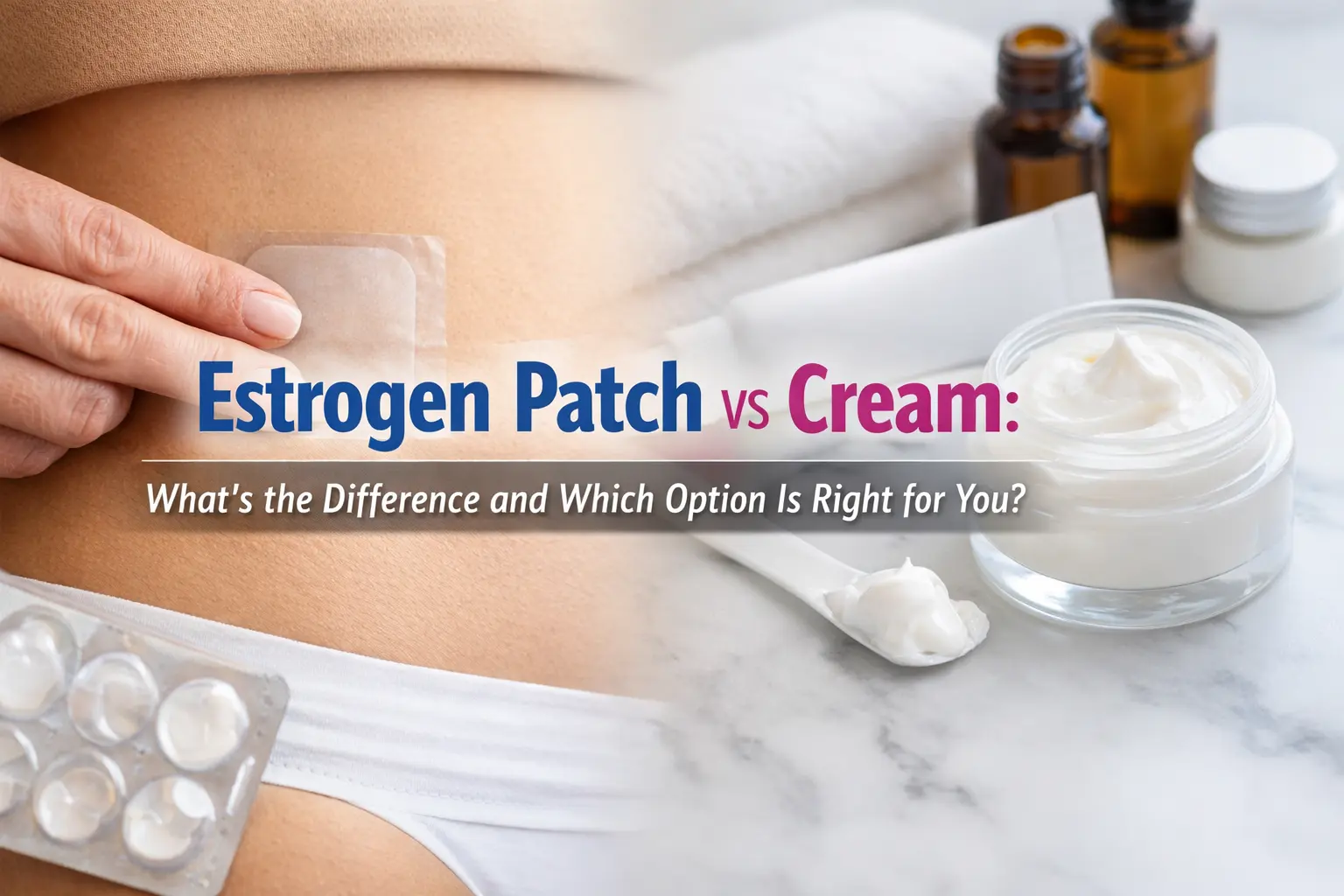
If you’re exploring hormone replacement therapy (HRT), one of the most common questions is whether an estrogen patch or estrogen cream is the better option.
Both are widely used during menopause, but they work in different ways and are often chosen for different reasons.
Understanding the differences between estrogen patch vs cream can help you make a more informed decision, especially when it comes to symptom relief, hormone absorption, convenience, and long-term comfort.
What Is an Estrogen Patch?
An estrogen patch is a transdermal form of hormone therapy that adheres to the skin and delivers estrogen directly into the bloodstream.
How estrogen patches work
Once applied, the patch releases estrogen at a steady rate over several days.
Because the hormone is absorbed through the skin, it bypasses the digestive system and liver, which helps maintain more consistent estrogen levels throughout the day.
Common benefits of estrogen patches
- Delivers steady, predictable hormone levels
- Often effective for hot flashes, night sweats, and sleep disruption
- Usually changed once or twice per week
- Less daily maintenance compared to creams
Potential downsides
- Skin irritation or adhesive sensitivity in some people
- Less flexibility for daily dose adjustments
- Patch placement and adhesion matter for effectiveness
What Is Estrogen Cream?
Estrogen cream is a topical form of estrogen therapy that can be used either for localized relief or systemic absorption, depending on how it’s prescribed and applied.
How estrogen cream works
Estrogen cream is most commonly used:
- Vaginally, to treat dryness, irritation, and discomfort
- Topically on the skin, when systemic absorption is desired
Absorption from creams can vary more from person to person, depending on application area, skin type, and consistency of use.
Common benefits of estrogen cream
- Effective for localized vaginal and urinary symptoms
- Offers greater dosing flexibility
- Useful for people who don’t tolerate patches well
Potential downsides
- Often requires daily application
- Hormone absorption may be less consistent
- Can feel messier or less convenient for some users
Estrogen Patch vs Cream: The Main Differences
The main difference between an estrogen patch and estrogen cream is how consistently estrogen enters the bloodstream and what symptoms each is best suited to treat.
Delivery and absorption
- Estrogen patches provide consistent systemic absorption through the skin.
- Estrogen creams may provide localized relief or systemic effects, but absorption can fluctuate.
Symptom coverage
- Patches are commonly used for whole-body menopause symptoms, such as hot flashes, night sweats, and mood changes.
- Creams are often preferred for localized vaginal symptoms, including dryness and discomfort.
Convenience and routine
- Patches are applied once or twice weekly.
- Creams usually require daily use, which may affect consistency.
Hormone level stability
- Patches tend to maintain more stable estrogen levels.
- Creams can lead to more variable estrogen exposure depending on application.
Which Is Better: HRT Patches or Gel/Cream?
There isn’t a single “better” option for everyone.
The answer depends on your symptoms, preferences, and health history.
You may benefit more from an estrogen patch if:
- Hot flashes or night sweats are your main concern
- You want consistent hormone levels
- You prefer a lower-maintenance routine
You may benefit more from estrogen cream if:
- Vaginal dryness or discomfort is your primary symptom
- You want flexible dosing
- You’ve had skin reactions to patches
In some cases, providers may recommend using both, a patch for systemic symptom relief and a cream for localized vaginal symptoms.
Safety Considerations and Side Effects
Both estrogen patches and creams are commonly prescribed and considered safe for many people when properly monitored.
Possible side effects may include:
- Breast tenderness
- Headaches
- Nausea
- Skin irritation (more common with patches)
Transdermal estrogen (patches and some creams) may have a lower impact on certain risks compared to oral estrogen, which is why delivery method matters when choosing HRT.
How to Choose the Right Estrogen Therapy
Choosing between an estrogen patch vs cream isn’t just about preference, it’s about matching treatment to your body and symptoms.
The right option depends on:
- The symptoms you want to treat
- How your body absorbs hormones
- Your medical history
- Your lifestyle and comfort level
Personalized care is key.
A clinician can help determine whether systemic estrogen, localized estrogen, or a combination approach makes the most sense for you.
Final Thoughts
When comparing estrogen patch vs cream, the goal isn’t to find a universally better option, it’s to find the option that works best for you.
Estrogen patches are often ideal for managing full-body menopause symptoms with consistent hormone delivery, while estrogen creams are especially helpful for targeted vaginal relief and flexible dosing.
At California Concierge Medicine, hormone therapy is personalized to each patient’s symptoms, goals, and health profile.
If you’re unsure which form of estrogen therapy is right for you, a one-on-one consultation can help clarify the safest and most effective approach.
FAQs
Is estrogen cream better than the patch?
Estrogen cream isn’t inherently better than a patch, it depends on what symptoms you’re treating. Creams are often preferred for localized vaginal symptoms, while patches are commonly used for full-body symptoms like hot flashes and night sweats.
What are the downsides of the estrogen patch?
Some people experience skin irritation or sensitivity where the patch is applied. Patches also offer less flexibility in daily dosing and require proper placement to ensure consistent hormone delivery.
Which form of estradiol is most effective?
The most effective form of estradiol is the one that best matches your symptoms and how your body absorbs hormones. Transdermal options, like patches and certain creams, are often effective because they deliver estrogen through the skin rather than the digestive system.
Can estrogen cause bruising?
Estrogen itself doesn’t usually cause bruising, but it can affect blood vessels and skin thickness over time. Bruising may be more noticeable in people with sensitive skin or those using blood-thinning medications.
What are the drawbacks of estrogen cream?
Estrogen cream often requires daily application and can be messier than other options. Absorption may vary depending on how and where it’s applied, which can lead to less consistent hormone levels for some people.
Does the estrogen patch make you gain weight?
Estrogen patches are not typically associated with weight gain. Some people notice temporary fluid retention when starting HRT, but long-term weight changes are usually related to aging, metabolism, and lifestyle rather than the patch itself.
What is the safest hormone replacement therapy?
The safest hormone replacement therapy depends on personal health history, age, and risk factors. Transdermal estrogen options are often considered a safer choice for many people compared to oral estrogen, especially when carefully monitored.
What are the symptoms of low estrogen?
Low estrogen symptoms may include hot flashes, night sweats, vaginal dryness, mood changes, poor sleep, low libido, and difficulty concentrating. Symptoms can vary widely from person to person.
What does low estrogen skin look like?
Low estrogen can make skin appear thinner, drier, and less elastic. Some people notice increased wrinkles, dullness, or slower wound healing as estrogen levels decline.

Dr. Kayla Milano, the founder of California Concierge Medicine, is a board-certified medical professional with deep expertise in functional and integrative medicine, hormone therapy, and regenerative treatments. Known for her patient-first philosophy, Dr. Kayla Milano blends modern science with compassionate care—delivering real solutions that improve quality of life.