
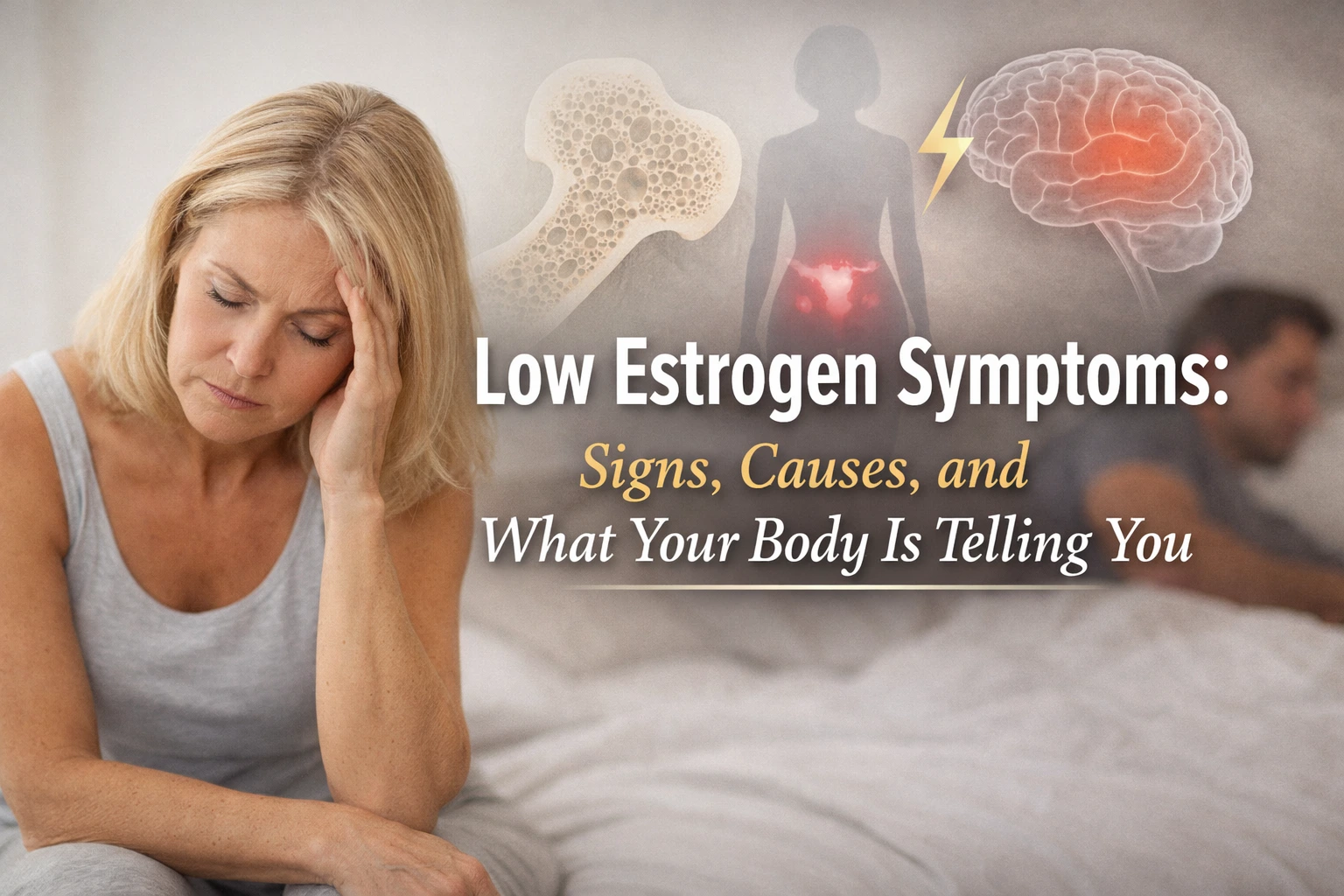
Estrogen plays a central role in how a woman’s body functions, from menstrual cycles and fertility to bone strength, mood, metabolism, and skin health.
When estrogen levels drop too low, symptoms can show up in ways that feel confusing, subtle, or easy to dismiss at first.
Some women experience sudden changes, while others notice symptoms that slowly build over time.
Understanding the signs of low estrogen can help you recognize when your body may need support.
GET HELP WITH YOUR LOW ESTROGEN SYMPTOMS
Quick Answer: What Are the Symptoms of Low Estrogen?
Low estrogen symptoms can include irregular or missed periods, hot flashes, night sweats, mood changes, vaginal dryness, low libido, sleep problems, joint pain, brain fog, and changes in skin or hair.
Symptoms vary depending on age, life stage, and overall health.
What Is Low Estrogen?
Low estrogen, sometimes called estrogen deficiency, occurs when the body doesn’t produce enough estrogen to support normal physiological processes.
Estrogen levels naturally rise and fall throughout life, but persistently low levels can affect multiple systems in the body.
Low estrogen is commonly associated with perimenopause and menopause, but it can also affect younger women due to stress, excessive exercise, nutritional deficiencies, certain medications, or underlying health conditions.
Common Low Estrogen Symptoms in Women
Low estrogen affects far more than reproductive health.
Symptoms often overlap across systems, which is why they’re sometimes overlooked or misattributed.
Reproductive and Sexual Symptoms
- Irregular, lighter, or missed periods
- Vaginal dryness or irritation
- Pain during intercourse
- Low libido
- Difficulty becoming pregnant
Estrogen helps maintain vaginal tissue elasticity, blood flow, and lubrication.
When levels drop, discomfort and sexual changes are common.
Hot Flashes, Night Sweats, and Sleep Problems
Estrogen helps regulate the brain’s temperature control center.
Low levels can cause:
- Hot flashes
- Night sweats
- Trouble falling or staying asleep
- Waking up overheated or restless
Sleep disruption often worsens fatigue, mood changes, and concentration issues.
Mood, Memory, and Cognitive Symptoms
Estrogen influences neurotransmitters that affect emotional regulation and mental clarity.
Low estrogen may lead to:
- Mood swings
- Anxiety or irritability
- Depressive symptoms
- Brain fog or forgetfulness
- Feeling emotionally overwhelmed or “off”
These symptoms are frequently mistaken for stress or burnout.
Skin, Hair, and Physical Changes
Because estrogen supports collagen production and hydration, low levels can cause:
- Dry or thinning skin
- Reduced skin elasticity
- Brittle nails
- Hair thinning or increased shedding
Some women notice visible changes that seem to happen faster than expected.
Bone, Joint, and Muscle Symptoms
Estrogen protects bone density and joint health.
Low levels may contribute to:
- Joint stiffness or aches
- Muscle weakness
- Slower recovery from exercise
- Increased risk of bone loss over time
These changes often develop gradually.
Weight Changes and Metabolic Shifts
Low estrogen can affect how the body stores fat and uses energy, leading to:
- Weight gain, especially around the abdomen
- Difficulty losing weight despite consistent habits
- Changes in insulin sensitivity
Hormonal shifts often make weight management feel harder than it used to.
Urinary and Bladder Symptoms
Estrogen supports the tissues of the urinary tract.
Low levels may result in:
- Frequent urinary tract infections
- Urinary urgency or leakage
- Increased bladder irritation
These symptoms are especially common during and after menopause.
Early Signs of Low Estrogen
Some symptoms appear before more obvious changes like hot flashes or missed periods.
Early signs of low estrogen may include:
- Subtle cycle changes
- Increased fatigue
- Mood sensitivity or anxiety
- Trouble sleeping
- Dry skin or vaginal dryness
Catching these signs early can help prevent more disruptive symptoms later on.
Low Estrogen Symptoms by Life Stage
Let’s look at some symptoms you may experience from low estrogen across different stages of life:
Younger Women
In younger women, low estrogen may be linked to:
- Chronic stress
- Over-exercising
- Under-eating or low body fat
- Hormonal signaling disruptions
Symptoms often include missed periods, fatigue, mood changes, and fertility concerns.
Perimenopause
During perimenopause, estrogen levels fluctuate unpredictably.
Common symptoms include:
- Irregular menstrual cycles
- Hot flashes or night sweats
- Sleep disturbances
- Mood swings or anxiety
Menopause and Postmenopause
After menopause, estrogen levels remain consistently low.
Symptoms often shift toward:
- Vaginal and urinary changes
- Joint pain and stiffness
- Bone density loss
- Long-term metabolic and cardiovascular concerns
What Causes Low Estrogen?
Low estrogen can result from:
- Natural aging and menopause
- Surgical removal of the ovaries
- Chronic physical or emotional stress
- Extreme exercise or restrictive dieting
- Certain medications or medical treatments
- Hormonal or endocrine disorders
Identifying the cause helps guide the most effective treatment approach.
When to See a Medical Provider
It may be time to seek medical guidance if:
- Symptoms are interfering with daily life
- Menstrual changes are unexplained
- Mood, sleep, or energy levels have shifted significantly
- Vaginal or urinary discomfort persists
- You’re concerned about bone or heart health
Hormonal symptoms are common, but they aren’t something you have to simply live with.
How Low Estrogen Is Diagnosed
Diagnosis typically involves:
- A detailed symptom review
- Blood testing, such as estradiol and related hormones
- Consideration of age, life stage, and medical history
Testing helps determine whether symptoms are hormone-related and what kind of support may be appropriate.
Treatment and Support Options
Treatment depends on symptom severity, hormone levels, and individual health goals.
Options may include:
- Hormone replacement therapy (HRT)
- Lifestyle and nutrition adjustments
- Stress and sleep optimization
- Symptom-specific treatments for vaginal, bone, or mood-related concerns
Personalized care is important, as hormone needs vary widely between individuals.
Listening to Your Body Matters
Low estrogen symptoms aren’t imagined, and they aren’t something you have to push through.
Hormonal changes can affect nearly every system in the body, sometimes in subtle ways that add up over time.
Paying attention early can make a meaningful difference in how you feel long-term.
With proper evaluation and individualized care, many women experience significant relief and a clearer understanding of their health.
For women in California seeking a more personalized approach, concierge-based care can offer the time and attention hormone health often requires.
FAQs: Low Estrogen Symptoms
How do I know if my estrogen is low?
Low estrogen is often suspected based on symptoms such as irregular or missed periods, hot flashes, vaginal dryness, mood changes, poor sleep, or unexplained fatigue. Blood testing combined with a review of symptoms and life stage is the most reliable way to confirm low estrogen.
How can I boost estrogen levels?
Estrogen levels may be supported through hormone therapy, addressing nutritional deficiencies, managing stress, improving sleep, and adjusting exercise intensity. The best approach depends on the cause of low estrogen and should be personalized.
How does low estrogen make you feel?
Low estrogen can make you feel tired, moody, anxious, mentally foggy, and physically uncomfortable. Many women also report sleep disturbances, joint aches, low libido, and a general sense that their body feels “off.”
Can you ovulate with low estrogen levels?
Ovulation can still occur with low estrogen, but it may be irregular or inconsistent. Persistently low estrogen can interfere with normal ovulation and may make conception more difficult.
What does a woman with low estrogen look like?
Some women with low estrogen notice drier or thinning skin, reduced skin elasticity, hair thinning, or changes in body composition. These changes vary widely and are not always outwardly obvious.
How do I know if I need estrogen supplements?
You may need estrogen support if symptoms are consistent with low estrogen and confirmed by lab testing. Decisions about supplementation should consider age, symptoms, health history, and individual risk factors.
What happens to the body if estrogen is low?
Low estrogen can affect multiple systems, including reproductive health, bone density, mood regulation, metabolism, skin integrity, and cardiovascular health. Over time, untreated low estrogen may increase the risk of bone loss and other health concerns.
How does low estrogen affect sleep?
Low estrogen can disrupt the body’s temperature regulation and neurotransmitter balance, leading to night sweats, difficulty falling asleep, frequent waking, and poor sleep quality. Sleep issues are one of the most common complaints associated with low estrogen.

Dr. Kayla Milano, the founder of California Concierge Medicine, is a board-certified medical professional with deep expertise in functional and integrative medicine, hormone therapy, and regenerative treatments. Known for her patient-first philosophy, Dr. Kayla Milano blends modern science with compassionate care—delivering real solutions that improve quality of life.